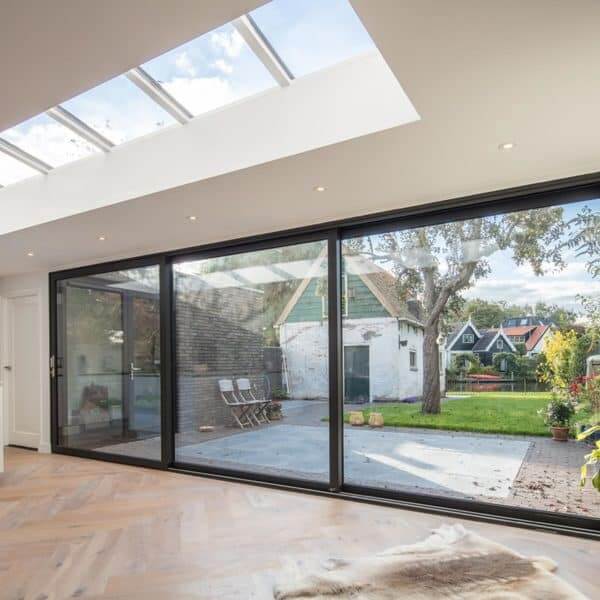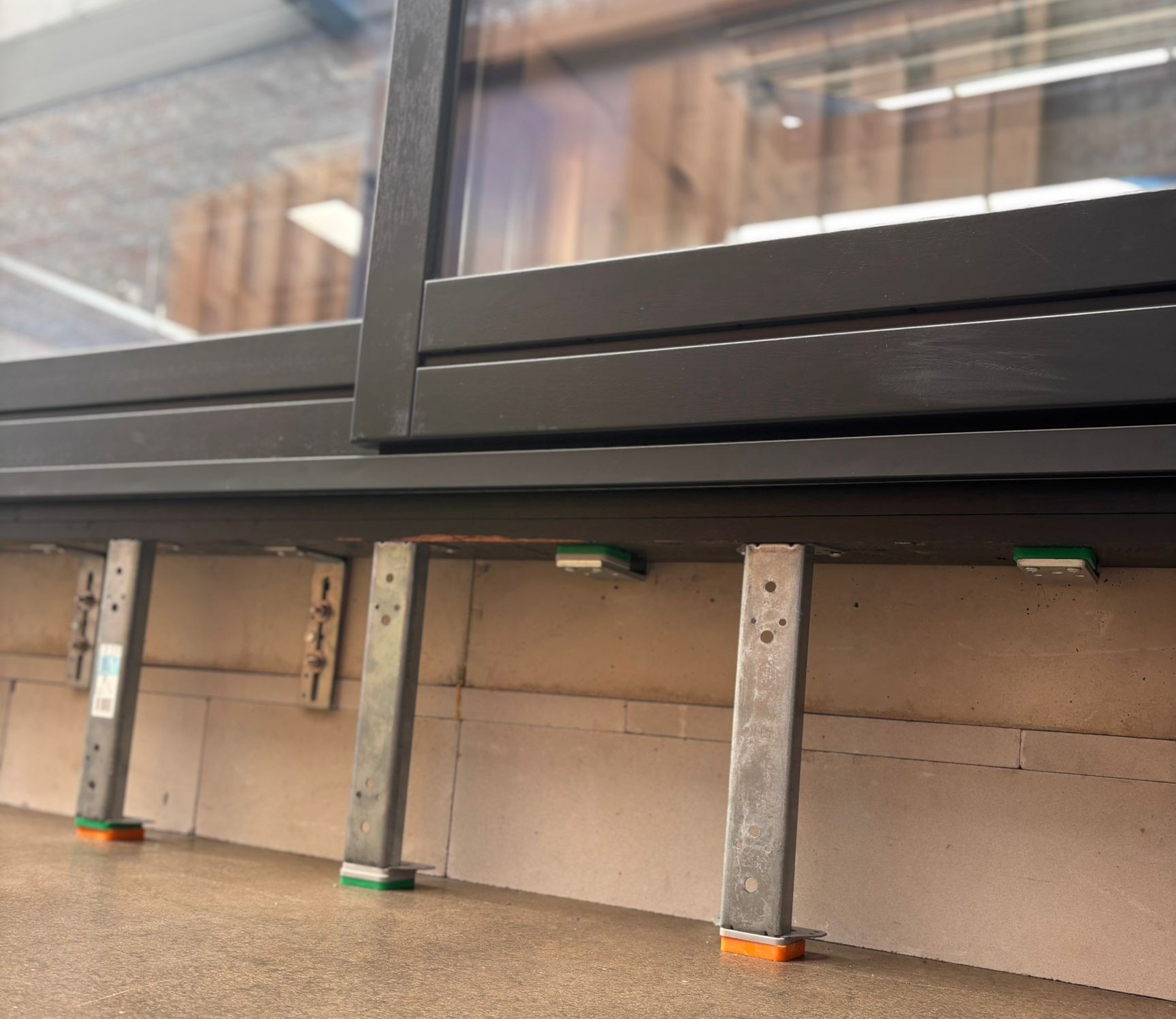
To create a seamless connection between the home and the garden, large sliding patio doors are being specified more frequently. At the same time, these sliding door systems are becoming larger and heavier, whether manufactured from timber, aluminium or uPVC. One aspect that is sometimes underestimated, however, is the importance of proper anchorage. In particular, the fixing of the bottom frame requires careful attention.
When a sliding door is opened, the sliding panels are often positioned behind one another. This results in a concentrated load being transferred to a single location. Depending on the number of sliding panels, this load can become two, three or even four times greater. As a result, there is an increased risk of deflection in the threshold or bottom frame.
"The key factor is the fixing of the bottom frame, as this is where the entire load is transferred," explains Arjan van Termeij of GB. "From a structural calculation perspective, the design may still comply, but sliding door systems are extremely sensitive to settlement and deformation. Even a slight deflection of just a few millimetres can significantly affect the smooth operation of the door."